

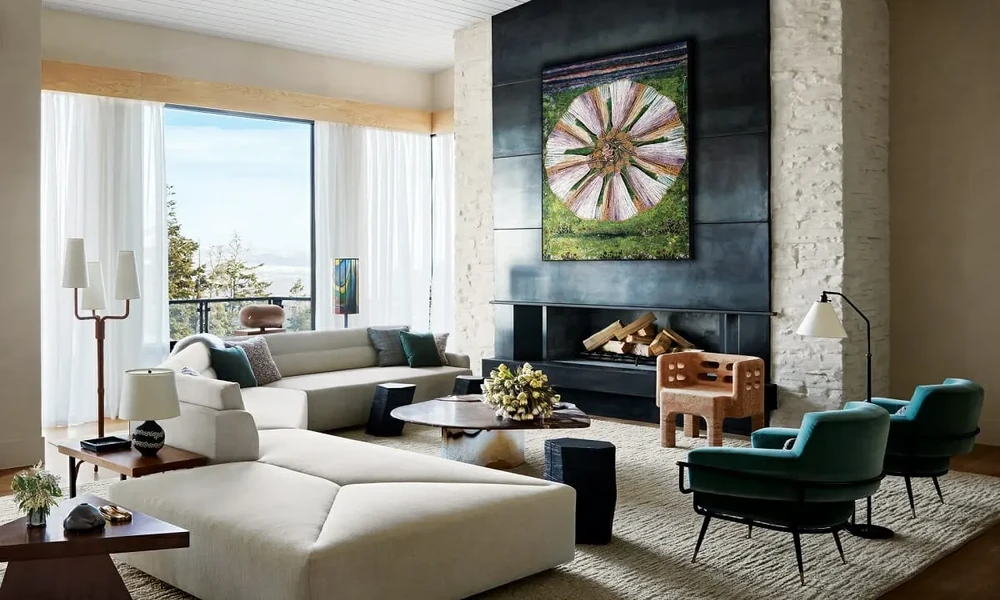
How does design shape daily living?
Rooms can feel wrong before people can explain why. Lighting, furniture placement, and acoustic flatness all register physically before being thought of. Work attributed to Shirin Vossoughi Amin points toward exactly this gap between conscious preference and lived experience inside a home. Colour application, material texture, and spatial proportion each shape how a room performs for its occupant across hours of daily use, not just during the first impression.
A poorly arranged living space generates friction that compounds across weeks. A room that flattens at the hour when it matters most due to blocked pathways, clutter on surfaces, and inadequate storage nearby is not dramatic. A persistent sense of home as somewhere to get through rather than settle into.
How space shapes wellbeing?
Clear zone definition changes how occupants mentally inhabit a space. Without it, a bedroom used for work rarely provides genuine rest. A living area without acoustic separation from a kitchen rarely supports quiet concentration. Interiors lacking clear spatial cues ask occupants to do mental work that a considered design would have handled structurally, producing a low-grade fatigue that occupants often attribute to other causes. Three spatial principles carry a direct connection to daily experience:
- Zone clarity – Distinct visual or material cues between functional areas allow occupants to shift between activity states more naturally. Where these cues are absent, spaces rarely perform either function as intended.
- Circulation flow – Unobstructed pathways between zones reduce physical and psychological friction simultaneously. Awkward furniture placement and blocked sightlines erode ease of movement in ways that register daily without always being identified as a design problem.
- Scale alignment – Furniture proportions matched to actual room dimensions prevent discomfort of overcrowding and unease of emptiness, both of which affect how long a space remains comfortable across extended daily use.
What design elements contribute most?
Interior elements influence lived experience regardless of home size or occupant lifestyle:
- A strong supply of natural light supports circadian rhythm, alertness during active hours, and rest as evening approaches instead of simply reducing illumination levels.
- Using the right materials reduces noise transfer, ensuring concentration in work areas and quiet in sleeping areas throughout the entire daily occupation cycle.
- A colour temperature application shifts perceived energy across different zones, supporting each zone’s function without requiring structural alterations to influence how a space feels.
- Integrated storage keeps surfaces clear, producing calmer visual environments that occupants consistently find less mentally taxing to inhabit across extended periods at home.
- Air quality and thermal consistency are directly related to physical comfort and alertness and are more important than they consciously recognise.
Living environment as a daily experience
Comfort at home accumulates across every surface touched, every path walked, and every transition between rest and activity that a space either supports or quietly resists. No single design decision produces it, and no single oversight removes it entirely. It is a product of many smaller decisions working together or against each other across a full interior.
Layout flexibility allows a home to accommodate changing occupant needs without requiring a complete redesign each time circumstances shift. Material durability extends the functional value of design decisions across years. Lighting adaptability covers conditions a single room faces across one day, from morning clarity through afternoon focus to evening wind-down, rather than performing well only under fixed circumstances.
A true sense of purpose goes beyond lighting, layout, material, colour, and storage options. All elements are interconnected; none operate alone.