

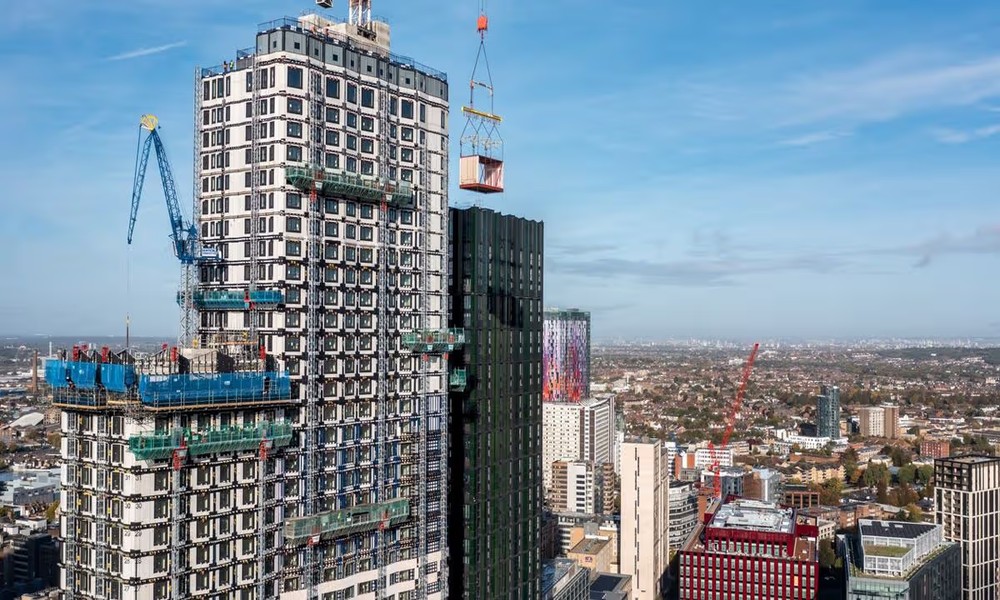
For decades, Croydon was often unfairly pigeonholed as a mere concrete satellite of Central London-a place people passed through on the Gatwick Express rather than a destination in its own right. However, if you take a walk through the town centre today, the visual evidence of a radical transformation is impossible to ignore. The horizon is no longer dominated by tired, mid-century office blocks. Instead, a gleaming silhouette of high-rise glass and steel is taking shape, signaling a new era for South London living.
This architectural shift is being driven almost entirely by the Build-to-Rent (BTR) sector. Unlike the traditional “buy-to-let” model, where individual landlords own single units, BTR developments are designed, built, and managed by institutional investors. For residents and letting agents in Croydon, this change represents more than just a few new buildings; it is a fundamental shift in how the local property market functions. As we look toward the first quarter of 2026, the completion of several major projects will likely cement Croydon’s status as the BTR capital of the UK.
The Institutional Shift: Quality Over Commutes
The philosophy behind Build-to-Rent is simple: it treats housing as a service rather than just a commodity. In the past, renting in Croydon often meant dealing with varying standards of maintenance and the luck of the draw with private landlords. The BTR model flips this on its head. These developments are purpose-built for long-term tenants, offering professional management, transparent contracts, and a level of amenity that was previously reserved for luxury hotels.
By Q1 2026, the volume of these units is expected to reach a tipping point. We are seeing a move away from the “commuter town” mentality. While the twelve-minute train journey to London Bridge remains a massive draw, the new wave of residents isn’t just looking for a place to sleep between office shifts. They are looking for a lifestyle. This has forced a rethink of the skyline, where height isn’t just about packing in units, but about creating vertical communities.
Redefining the Skyline: The Projects Shaping 2026
If you look at the current construction pipelines, the scale of ambition is staggering. Projects like the modular towers at George Street-some of the tallest of their kind in the world-have already set the tone. But the next eighteen months will see the “filling in” of the Croydon map. We are looking at a future where the skyline is a cohesive blend of residential hubs, each competing to offer the most sophisticated living experience.
The redevelopment of the former Nestle building and the surrounding sites near Queen’s Gardens are prime examples of what to expect by early 2026. These aren’t just isolated towers; they are integrated into the urban fabric, providing new public squares, retail units, and green spaces. The architectural language has shifted from the grey, Brutalist tones of the 1960s to light-reflective glass and textured brickwork that feels far more human and approachable.
Why Croydon? The Perfect Storm for Investors
You might wonder why Croydon has become the ground zero for this BTR explosion compared to other London boroughs. The answer lies in a combination of land availability, transport links, and a proactive local planning environment. While Central London sites are prohibitively expensive and space-constrained, Croydon offered the “brownfield” opportunities necessary to build at scale.
Institutional investors-the pension funds and insurance giants-crave stability. Croydon’s regeneration zones provide a clear 10-to-15-year growth trajectory, making it an ideal spot for long-term capital. For those working as letting agents in Croydon, the influx of institutional stock provides a consistent, high-quality product to offer a demographic that is increasingly disillusioned with the traditional rental market. These tenants are often “renters by choice”-young professionals and downsizers who value the flexibility and the perks of BTR over the burdens of homeownership.
The Amenities War: What Tenants Want in 2026
As we approach 2026, the competition between these massive developments is heating up. It is no longer enough to offer a clean flat and a secure front door. To stand out in the Croydon skyline, developers are engaged in what some industry insiders call the “amenities war.”
When these projects hit full occupancy in Q1 2026, we can expect to see:
* Co-working Hubs: With hybrid work now the standard, BTR buildings are essentially becoming mini-offices, featuring high-speed mesh Wi-Fi and private meeting pods.
* Wellness Centres: On-site gyms are the bare minimum; the new standard includes yoga studios, treatment rooms, and even rooftop running tracks.
* Social Connectivity: Rooftop terraces with outdoor cinemas, communal kitchens for hosting dinner parties, and pet-friendly zones with “dog washes.”
This focus on community is a direct response to the isolation many felt during the early 2020s. People want to know their neighbours, and BTR operators are hiring dedicated “community managers” to organise events, from wine tasting to book clubs.
The Impact on Traditional Buy-to-Let
Does the rise of these glass giants mean the end for the traditional private landlord? Not necessarily, but it does mean the bar has been raised. The “accidental landlord” with a dated studio flat will find it increasingly difficult to compete with a BTR suite that comes with a 24-hour concierge and an on-site gym.
However, this competition is actually healthy for the Croydon market. It is driving a “flight to quality.” To remain competitive, private landlords are having to invest more in their properties, improving EPC ratings and modernising interiors. The result is a general uplift in the quality of housing across the borough. By 2026, the “shabby” rental reputation Croydon once had will likely be a thing of the past, replaced by a market that caters to a much broader and more affluent demographic.
Socio-Economic Ripples: Beyond the Buildings
The changing skyline isn’t just about aesthetics; it’s an economic engine. Each new BTR tower brings hundreds, if not thousands, of residents with disposable income into the town centre. This footfall is the lifeblood that Croydon’s retail and evening economy needs. We are already seeing the “Boxpark effect” evolve into something more permanent, with independent cafes, artisan bakeries, and boutique fitness studios popping up in the shadows of the new towers.
By Q1 2026, the synergy between the residential units and the local economy should be in full swing. The planned improvements to the public realm-better lighting, wider pavements, and more trees-will make the town centre a place where people want to linger rather than just a transit point. This “place-making” is the secret sauce that turns a collection of buildings into a genuine neighbourhood.
Looking Ahead to Q1 2026
The road to 2026 hasn’t been without its bumps. Economic headwinds, fluctuating interest rates, and changes in building regulations have all presented challenges. Yet, the momentum in Croydon seems unstoppable. The sheer volume of cranes currently on the horizon suggests that the vision for a “mini-Manhattan” in South London is well on its way to being realised.
For investors, the message is clear: Croydon is maturing. The wild-west days of speculative buying are being replaced by a sophisticated, institutionally-backed market. For residents, the future looks bright, offering a level of housing quality that was once out of reach for the average renter.
As the sun sets over the Surrey Hills and reflects off the new glass towers of George Street and Wellesley Road, it’s easy to see why the narrative is changing. Croydon is no longer a town in waiting; it is a town that has arrived. The skyline of Q1 2026 will be a testament to resilience, urban innovation, and a new way of living that prioritises community over mere square footage. Whether you are a long-term resident or a newcomer attracted by the bright lights of the new developments, one thing is certain: Croydon’s ascent is only just beginning.