

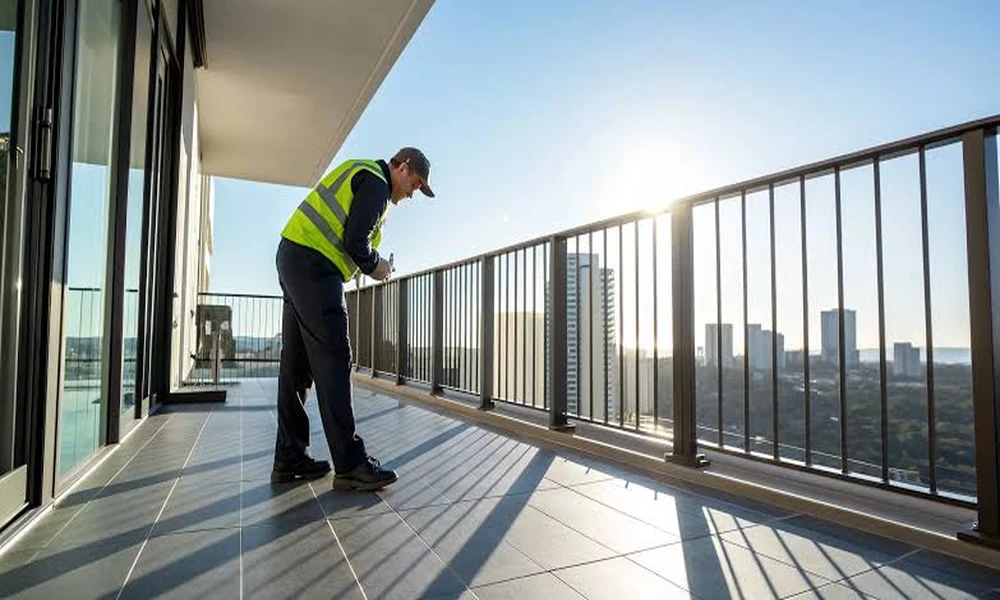
You step out onto your balcony and notice the surface has started to pit, or there’s a hairline crack running along the edge, or worse – a section feels slightly spongy underfoot. Most homeowners let this sit for a season or two, assuming it’s cosmetic. It usually isn’t. Balcony deterioration is one of those problems that looks minor on the surface and turns expensive underneath, which is exactly why picking the right queens general contractor for the repair matters more than people expect going in.
This isn’t a scare-tactic article. It’s a practical look at what balcony problems actually mean, what a qualified contractor should be checking, and how balcony paving nyc work differs from a standard patio or driveway job in ways that catch a lot of homeowners off guard.
Why Balconies Fail Differently Than Other Paved Surfaces
A driveway sits on soil. A balcony sits on a structural slab, usually cantilevered off the building, with a waterproofing membrane sandwiched between the slab and whatever finish surface sits on top. That difference is everything. When water gets past a compromised membrane on a driveway, it just sinks into the ground. When it gets past a compromised membrane on a balcony, it sits against structural concrete and steel reinforcement, and over New York’s freeze-thaw cycles, that trapped moisture expands and contracts until cracks widen, rebar corrodes, and the slab itself starts to spall.
This is why a queens general contractor experienced in balcony work looks past the surface finish and asks about the waterproofing system first. If nobody addresses the membrane, resurfacing the top is just cosmetic – the underlying problem keeps working against the structure.
Warning Signs Worth Taking Seriously
A few signs tend to show up before things get serious, and they’re easy to miss if you’re not looking for them: efflorescence (white, chalky staining on the underside of the balcony or nearby walls, signaling water migration through the concrete), rust staining that points to corroding reinforcement, cracks that follow a pattern along the perimeter, and a hollow or spongy sound when you tap the surface. None of these mean immediate danger on their own, but any of them is a reason to get an inspection before the next winter freeze-thaw cycle does more damage.
Balcony Paving NYC: What the Right Process Actually Looks Like
A proper balcony paving nyc job isn’t just about laying new pavers or resurfacing the top layer. It starts with diagnosing the extent of damage – determining whether the issue is limited to the surface finish or has reached the structural slab and reinforcement underneath – then removing compromised material down to sound substrate, which sometimes means demolishing more than a homeowner initially expects.
The step that actually determines how long the repair lasts is repairing or replacing the waterproofing membrane, since it’s the layer protecting the structure long-term and also the one most tempted to skip because it’s invisible once the job is done. After that comes re-establishing proper drainage and slope so water sheds away from the building, and finally installing the finish surface – pavers, coating, or tile – in a way that’s compatible with the waterproofing underneath rather than trapping moisture against it. Skip any of these steps, and you’re paying for a repair that looks good for a season and fails again within a couple of years.
Why This Work Calls for a General Contractor, Not Just a Paving Crew
Balcony work sits at the intersection of several trades – masonry, waterproofing, structural assessment, and finish work – which is exactly why so many property owners end up going through a queens general contractor rather than hiring a standalone paving company. A general contractor coordinates the sequence properly: structural repairs happen before waterproofing, waterproofing gets inspected before the finish surface goes down, and permits get pulled when the scope requires them.
Trying to manage that sequence yourself across separate specialty contractors is where a lot of balcony projects go wrong – someone lays new pavers before the membrane repair actually cures, or nobody coordinates the masonry work with the waterproofing schedule, and the finished product fails faster than it should have.
Permits and Compliance for Balcony Repairs
Balcony repairs in NYC often require permits, particularly when the work involves structural repair to the slab or reinforcement, or when it’s tied to a Local Law 11/FISP violation on a multi-family building. A qualified queens general contractor will know whether your specific project needs Department of Buildings sign-off and will handle the filing rather than leaving you to figure it out mid-project. Buildings under FISP inspection cycles, in particular, need repairs documented properly so the work actually clears any open violations instead of creating new paperwork down the line.
Vetting a Contractor for Balcony Work
Before signing a contract, it’s worth understanding a contractor’s approach to a few specific things: how they determine whether the waterproofing membrane needs full replacement versus a targeted repair, what warranty applies to the waterproofing separately from the finish material (since the two fail on different timelines), and whether they’ve handled Local Law 11 compliance work if your building has open conditions. A contractor who jumps straight to “just resurface it” without inspecting underneath the current finish hasn’t actually diagnosed the problem – and one who answers these points with specifics rather than reassurance is usually the one who understands what’s actually holding your balcony together.
Getting a Repair That Actually Lasts
Balconies take a beating in this climate, and cutting corners on the layer nobody sees – the waterproofing – is the single most common reason repairs fail early. Whether you’re dealing with early warning signs or a balcony that’s already visibly deteriorating, working with an experienced queens general contractor who treats balcony paving nyc projects as structural work, not just surface cosmetics, is the difference between a repair that holds up for fifteen years and one you’re revisiting after three.