

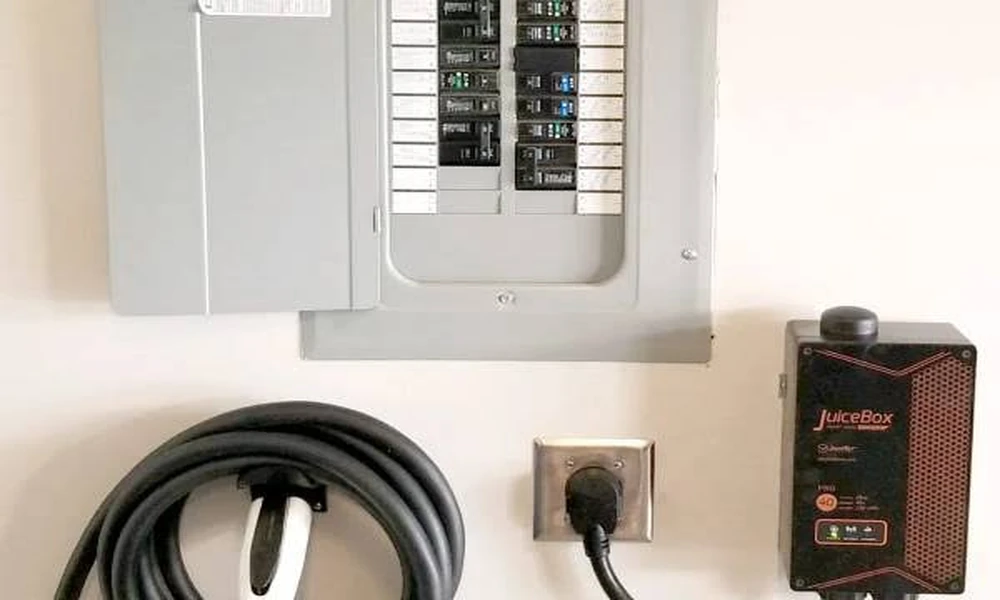
Bringing home an electric car changes one small daily habit: where the fuel comes from. For most owners the answer is the garage or driveway, and that raises a set of practical questions about outlets, wiring and the panel on the wall. Getting them in the right order saves money and avoids surprises.
Electricians such as Anderholm Electric, which lists EV charger installation among its services in Sonoma and Marin Counties, handle that work every day. This article follows the path from the simplest option to a full installation, using a checklist from the utility PG&E.
Start With the Plug You Already Have
PG&E’s Electric Vehicle Charger Installation Checklist, dated November 2024, begins with the simplest option. Level 1 charging uses a standard 110 volt outlet, and the page says it usually needs no panel upgrade. Manufacturers typically include the cord set. It is the slowest way to charge, but for a driver with a short commute it may be enough.
When 240 Volts Makes Sense
Level 2 charging uses 240 volts, through either a dryer-style outlet or a hardwired unit, and the checklist says it charges up to four times faster. It also says Level 2 may require a service upgrade. It puts the price of a Level 2 charger at about 500 to 700 dollars, a figure that reflects the checklist’s date and will vary.
The Panel Question
The most important line in the checklist is advice to consult a qualified electrician to assess whether your electrical panel has capacity for a Level 2 charger. A home that already runs an electric range, a heat pump and other large loads has less spare capacity than one that does not. Only an inspection of your own panel can answer this.
Where the Charger Goes Matters
According to the checklist, the farther your charging station is from your service panel, the more costly the installation. It gives an average installation range of 400 to 1,200 dollars. Placing the charger on the garage wall nearest the panel is often cheaper than a driveway post at the far end of the lot.
Talk to Your Electrician About Permits
The checklist tells readers to ask their electrician about permitting and inspections if required. It gives no details, because the rules depend on where you live. Your city or county building department is the place to confirm them.
Tell the Utility
The checklist says you must contact PG&E to start a change of service application. That applies if PG&E is your utility. If it is not, ask your own utility what it requires before the charger goes in.
Choosing a Rate Plan
The checklist also explains that electricity prices differ between peak and off-peak periods, and it points readers to an EV Savings Calculator on PG&E’s site to compare rate plans. Because most charging happens overnight, the rate you choose can matter as much as the charger itself.
What the Checklist Does Not Cover
The document does not mention rebates. The text I could read was also fragmented, with layout pieces mixed in, so confirm the figures and steps on PG&E’s own site or with your electrician before relying on them. The prices are from November 2024 and may have changed.
About the Company Behind the Link
The website at the linked address belongs to Anderholm Electric, located at 75 Executive Ave, Suite 16, in Rohnert Park, California, which says it serves Sonoma and Marin Counties. Its listed services include EV charger, home generator and home backup battery installation, electric panel installation and service upgrades, wiring and wiring modernization, knob and tube wiring replacement, SPAN smart panels, indoor and outdoor lighting and 24 hour emergency service. It lists a California contractor license, 1042523, a phone number of (707) 806-4860 and hours of Monday to Friday, 7 am to 5 pm, and advertises a 100 percent satisfaction guarantee without describing a warranty. It does not state years in business. Confirm the license with the Contractors State License Board before you hire.