

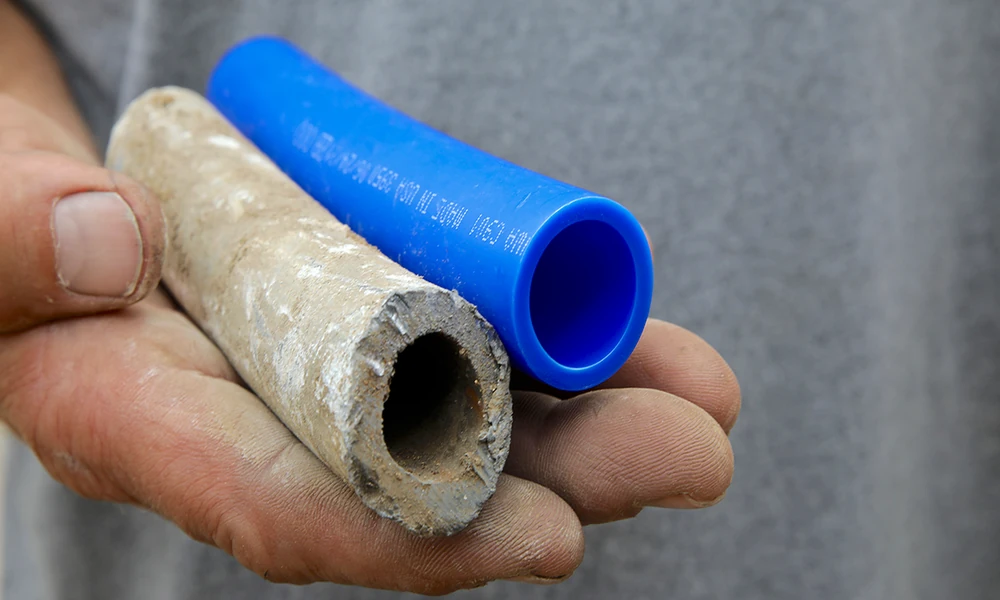
Go down to the basement of almost any house built before the 1960s and look for the spot where the water pipe comes through the foundation wall. There’s usually a short run of pipe before the meter. It might be dull gray, slightly bulged at the joints and soft enough to dent with a key. Most homeowners walk past it for years without a second look.
That short stretch is the end of the service line, the pipe that carries water from the street main into the house. In many older neighborhoods across the region, that pipe was made of lead. Cities used it for decades because it was cheap, it bent easily around obstacles and it lasted a long time. Nobody worried much about what it might add to the water.
If you aren’t sure what your service line is made of, a licensed Lyons plumber can usually tell during a short visit. That’s worth doing before you spend money on filters or replacement. According to the EPA, lead service lines are usually the biggest source of lead in tap water. They’re most common in older cities and in homes built before 1986.
How Lead Ends Up in a Glass of Water
Lead pipe doesn’t release metal at a steady rate. The amount that gets into the water depends on chemistry and time. Water that is slightly acidic or low in minerals corrodes the inside of the pipe faster. Water that sits still overnight, or while a family is away on vacation, picks up more lead than water that keeps moving.
Over the years, most lead lines build up a thin mineral scale on the inside that works as a barrier. That’s why many older homes test fine for years. The scale is fragile, though. Street work, a water main repair or even replacing the meter can shake it loose and release particles. A home that tested clean one year can test differently after a crew digs up the block.
Lead can also come from inside the house. Older brass faucets and valves, and copper pipes joined with lead solder before the solder ban, can add small amounts even when the service line is copper.
A Simple Check You Can Do Yourself
You don’t need special tools for a first look. Find the pipe where it enters the house, usually near the water meter. Then work through these steps:
- Note the color. Lead is dull gray when it’s untouched, copper looks like a penny, and galvanized steel is a darker gray with threaded joints.
- Gently scratch a small spot with a coin or flat screwdriver. Lead shows a shiny silver color and scratches easily.
- Hold a strong refrigerator magnet against the pipe. It won’t stick to lead or copper, but it will stick to galvanized steel.
- Look at the joints. Lead lines often have rounded, bulb shaped joints instead of threaded fittings or soldered couplings.
This check only tells you about the visible section. Some homes have a copper pipe inside the basement connected to a lead line under the yard. Others had part of the line replaced during an earlier repair. Your water utility’s records, or a plumber who can test the line at the curb stop, will give you a fuller answer.
Living With an Old Line While You Plan
Replacing a service line is rarely a same week job. It takes coordination with the village, permits and sometimes waiting until the ground thaws. In the meantime, some simple habits lower your exposure a lot.
Use only cold water for drinking, cooking and mixing baby formula. Hot water dissolves lead faster, and boiling doesn’t remove it. It actually concentrates it as the water evaporates. When water has been sitting for several hours, run the kitchen tap for a few minutes, take a shower or start a load of laundry first to flush the line before you fill a glass.
A filter certified to remove lead is a good investment. Pitcher filters and faucet mounted units are both available. Check the packaging for certification to NSF/ANSI Standard 53 for lead, and change the cartridge on schedule, because a clogged filter stops doing its job without any warning. The small aerator screen at the tip of the faucet catches particles too, so unscrew it every few months and rinse it.
Testing is the only way to know what’s actually coming out of the tap. Many utilities offer free or low cost sampling kits. Take the first draw sample in the morning, before anyone in the house has run water.
What Replacement Actually Involves
The idea of a new service line makes people picture a torn up front yard. The work is often less disruptive than that. Many replacements now use trenchless methods. The crew digs a small pit near the street and another near the foundation, then pulls a new copper or approved plastic line through the old path or bores a new one between the two pits.
Inside the house, the plumber usually installs a new shutoff valve and often replaces the meter connection. If your home has older galvanized pipes inside, it’s worth asking whether they should be looked at too. Galvanized pipe that sat downstream of a lead line can collect lead particles inside its rust.
After the switch, the plumber flushes the system thoroughly. Running cold water through every fixture for a while clears out any disturbed sediment. A follow up water test a few weeks later confirms the job worked.
Costs vary with the length of the line, depth, soil and whether the sidewalk or driveway is in the way. Many municipalities in the area run cost sharing or grant programs. Call your village office before you sign a contract, since some programs only cover work done after you apply.
Peace of Mind Starts at the Meter
The pipe bringing water into your home is probably the oldest working part of the house, and also the one people think about least. Knowing what it’s made of turns a vague worry into something you can plan for. A few minutes in the basement with a coin and a magnet, a call to the utility and an honest water test will tell you where you stand. Then you can decide whether to keep a filter on the tap or schedule a new line before the next construction season.